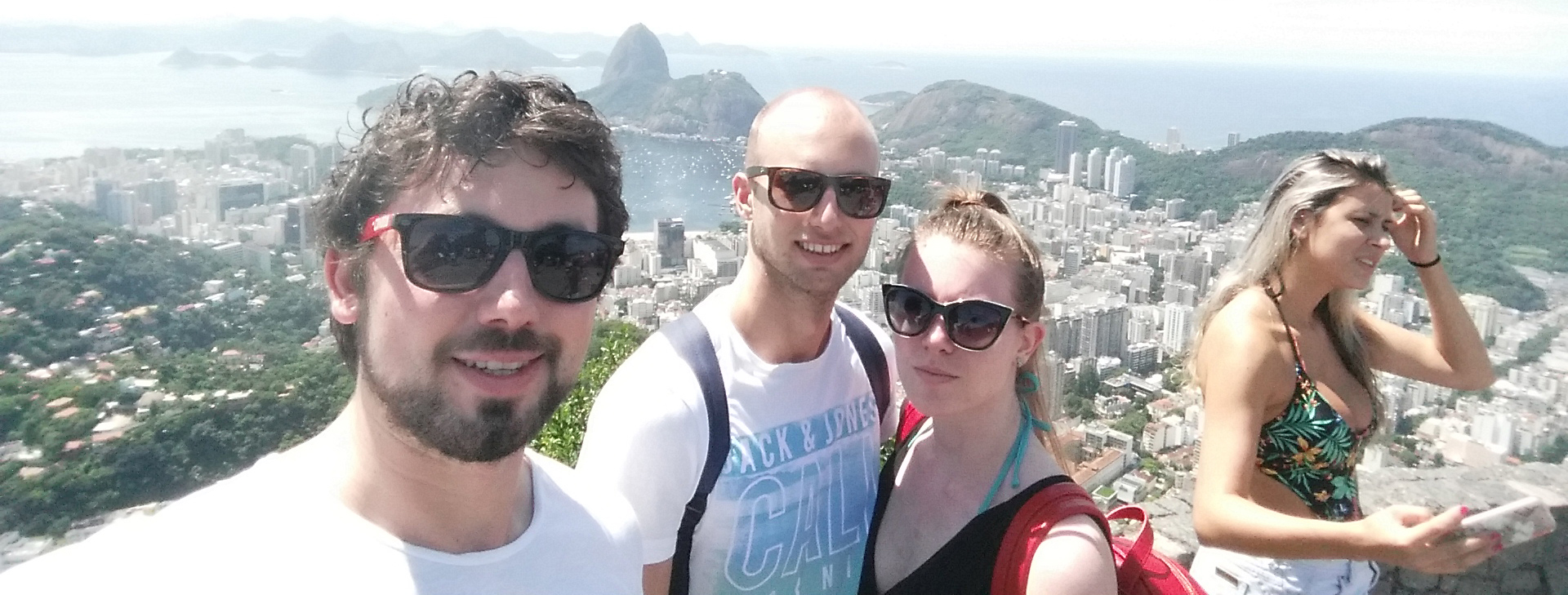
It was just another relaxed day where I was enjoying the extended holidays before moving to work to Switzerland. Fortunately, while you read news about our football club Hajduk, which is a very masochistic thing itself, from time to time you have to clear up your thoughts. So, I’ve checked whether there is any especially cheap plane ticket for the next month or two. From my experiences, these types of error fares are more common for Asia, but this time there was a pleasant surprise – return tickets from Milano to Rio de Janeiro for 300 euros. Of course, in situation like this there was no time for thinking, and already by the evening the tickets were bought. The night drive to Milano was worth the suffering, considering the final destination.
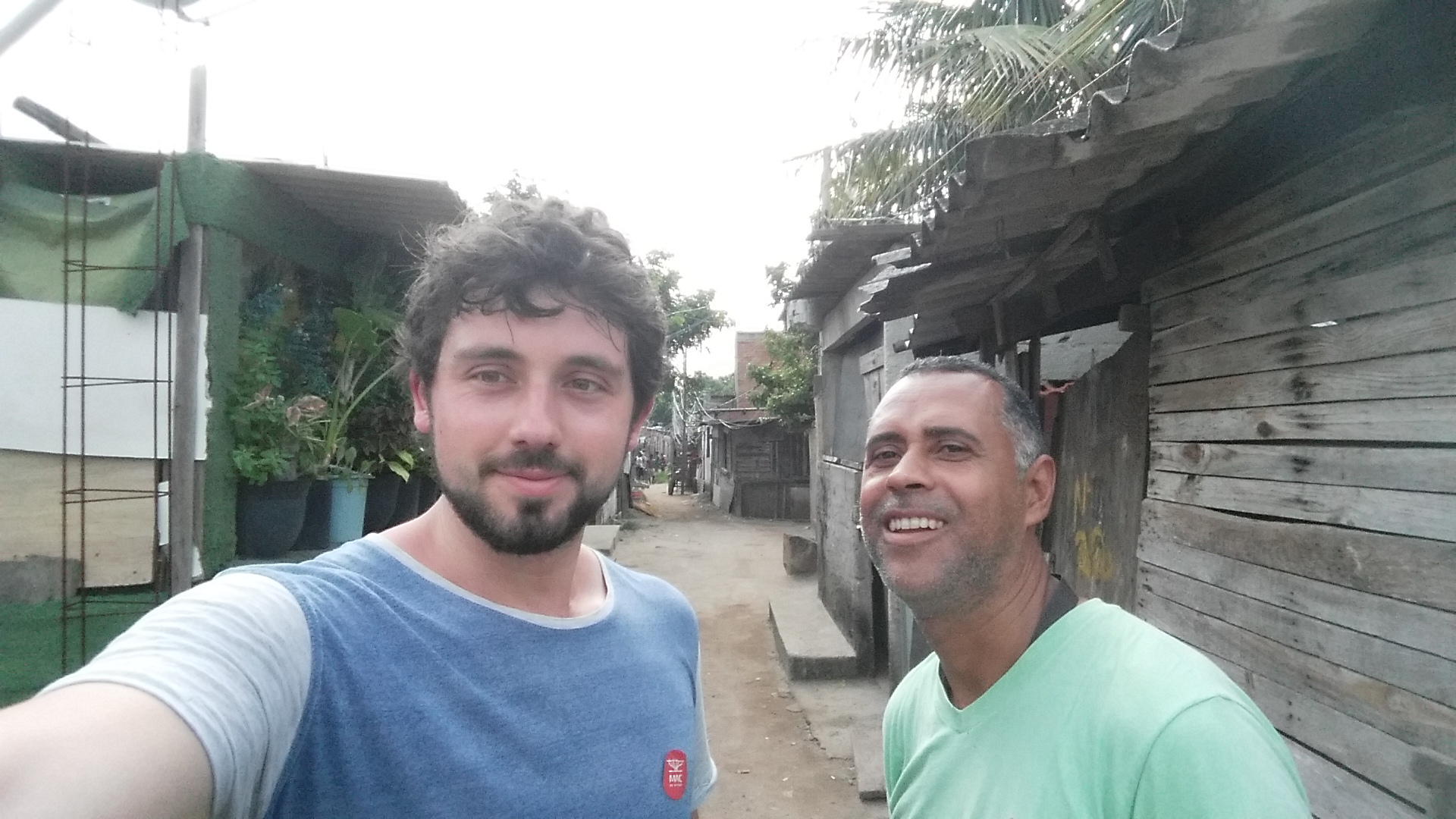
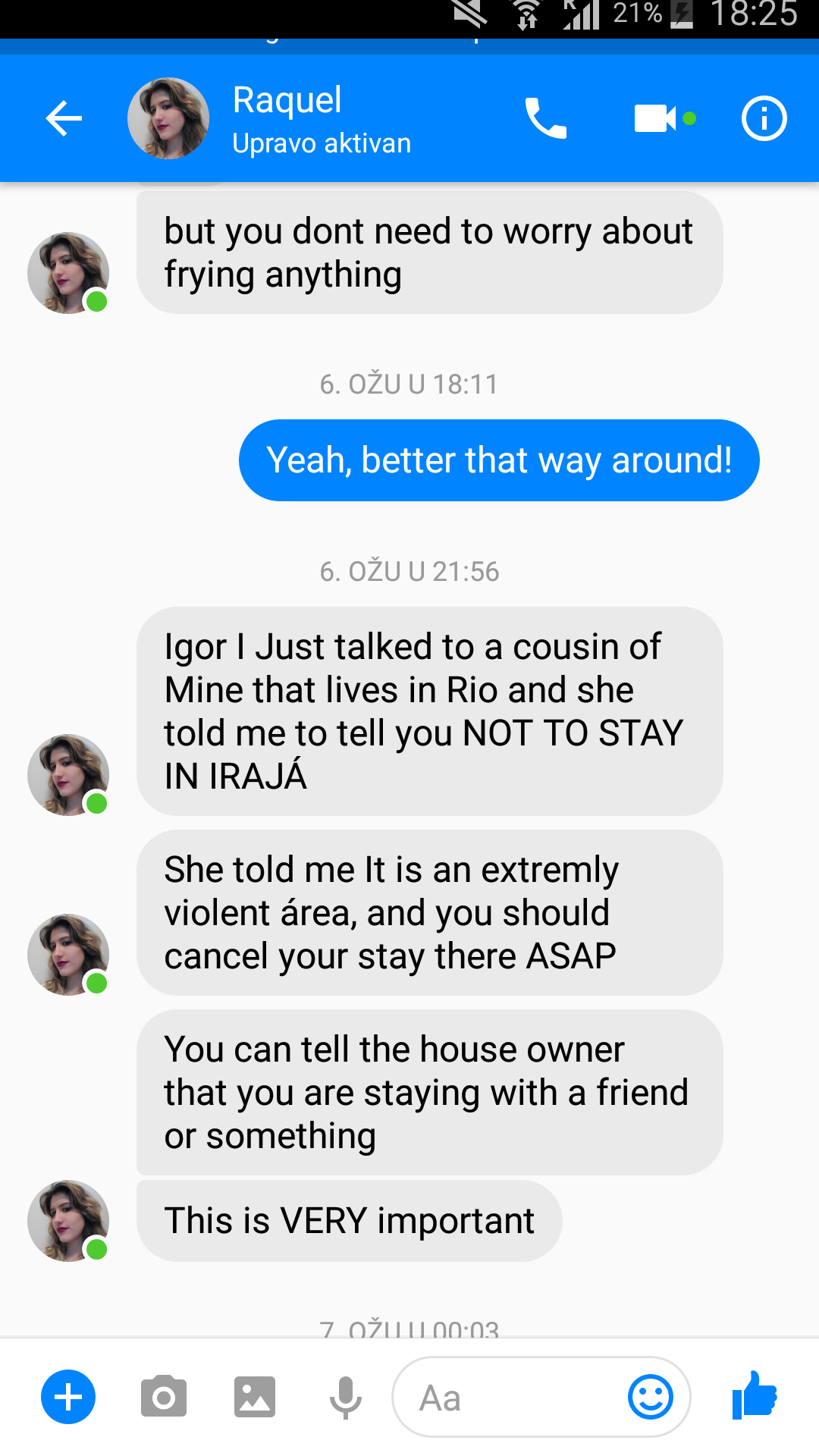
I went down to finding a Couchsurfing host immediately afterwards, and very soon encountered one in Iraja, neighborhood in the north of Rio. Fortunately, in Brazil I already had a lot of friends. Ana Paula, who hosted Dunja and me in Sevilla, meanwhile went back to Brasilia and offered to host us there, while Raquel, a girlfriend of my roommate Robert from Barcelona was in Belo Horizonte. When I asked Raquel about the neighborhood where we were about to stay, well, we could say she was not rather affirmative about it. However, the experience taught me that people usually overreact with that kind of things, since as long as you don’t behave as a stupid tourist, you can live everywhere as the locals do. The same way Iraja turned to be just fine, where I’ve soon got to feel like home and went together with Juliana to Muay Thai training, and in general, met a lot of interesting people. That we are not exactly in Split, we could remind ourselves during one of the nights, when we were awakened around 3-4 AM by the gunshots that lasted for some minutes. Surprising to us, but rather common for the locals.
All of us know Brazil as a country of Samba and football, but it’s enough to scratch the surface a little bit to understand that Brazil is much more than that. Since the time of the Treaty of Tordesillas in 15th century, between Spain and Portugal, Portugal has acquired almost the half of South America, which was very soon to become Brazil. The land rich in ores, and numerous fields of coffee, cacao, rubber and much more was for a long time exhausted for the profit of Europeans. However, the turning point starts with the fall of Portugal to France at the beginning of 19th century, what even brought the capital of Portuguese colonial empire to Rio for a time. Afterwards, Brazil becomes a kingdom, and then through the chaotic 20th century, like everywhere in Latin America, becomes kind of a democracy. Today, unlike the majority of Latin America, there is a decent share of industry in Brazil, making Brazil a rather serious country. With the, chronic for Latin America, inequality and the fact that corruption is on a such a grand scale that even Croatia in comparison doesn’t seem so corrupted. Here it seems there are even politicians who publicly brag on TV that they “do steal, but also do something for the people at least”
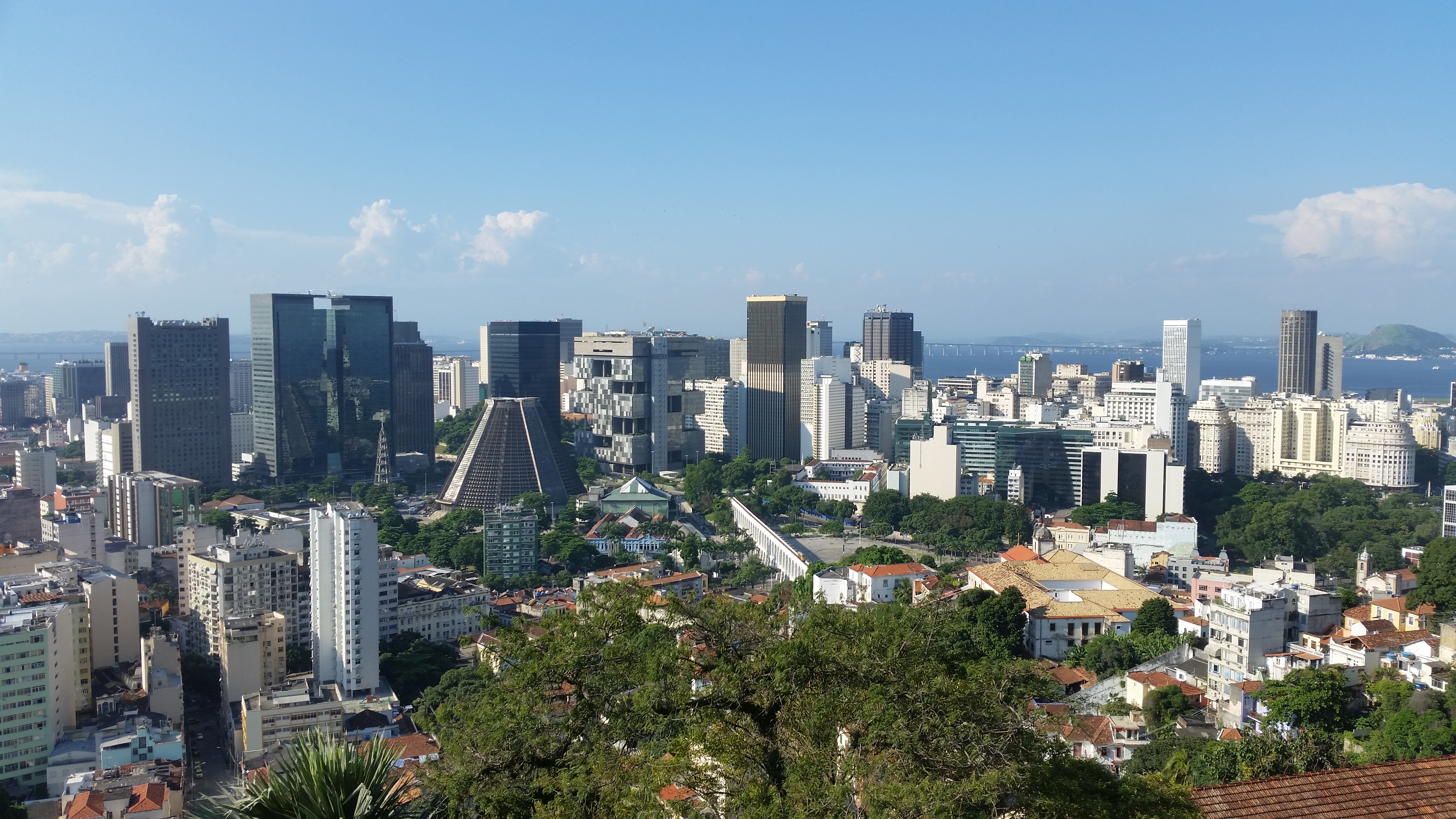
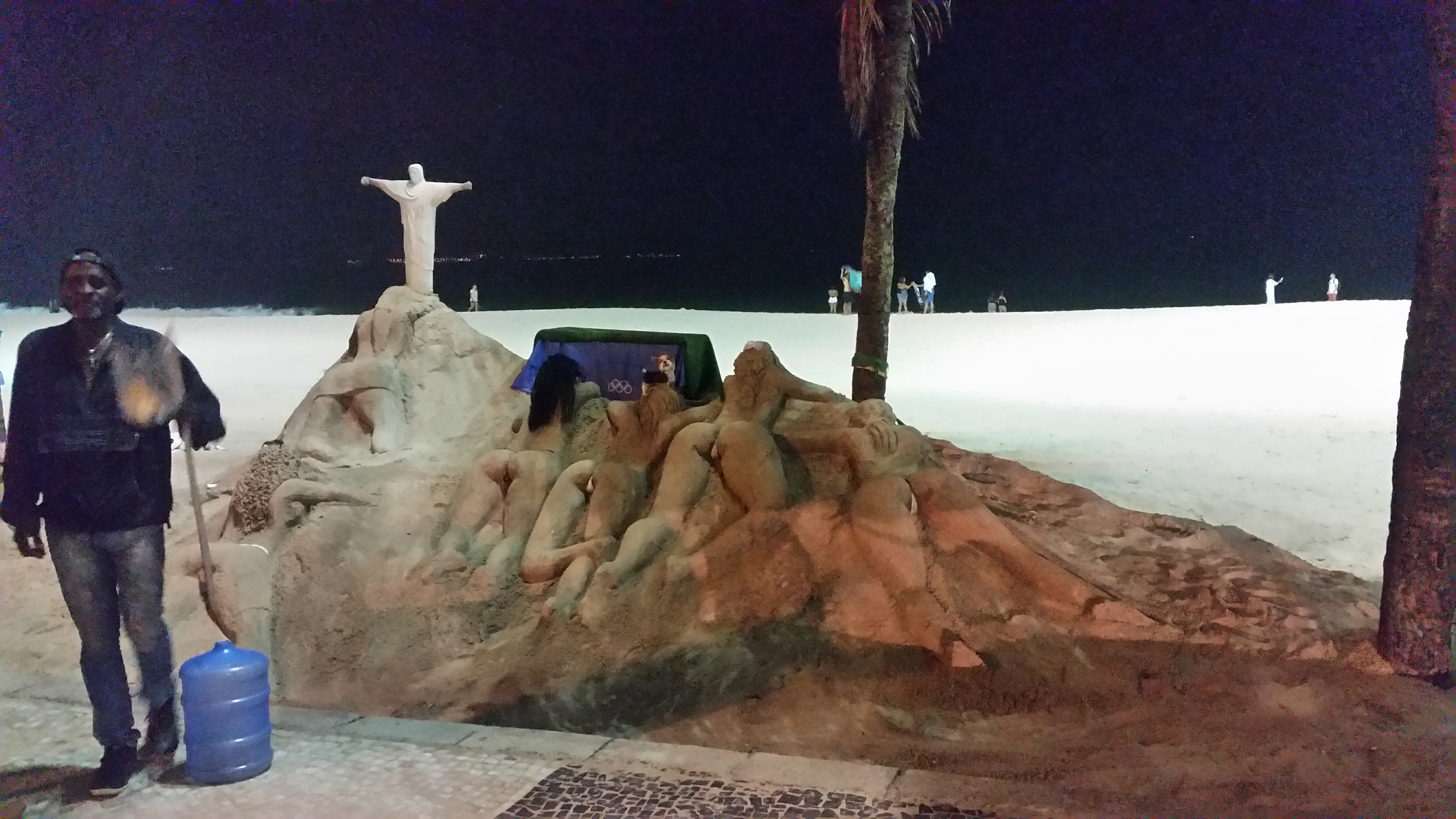
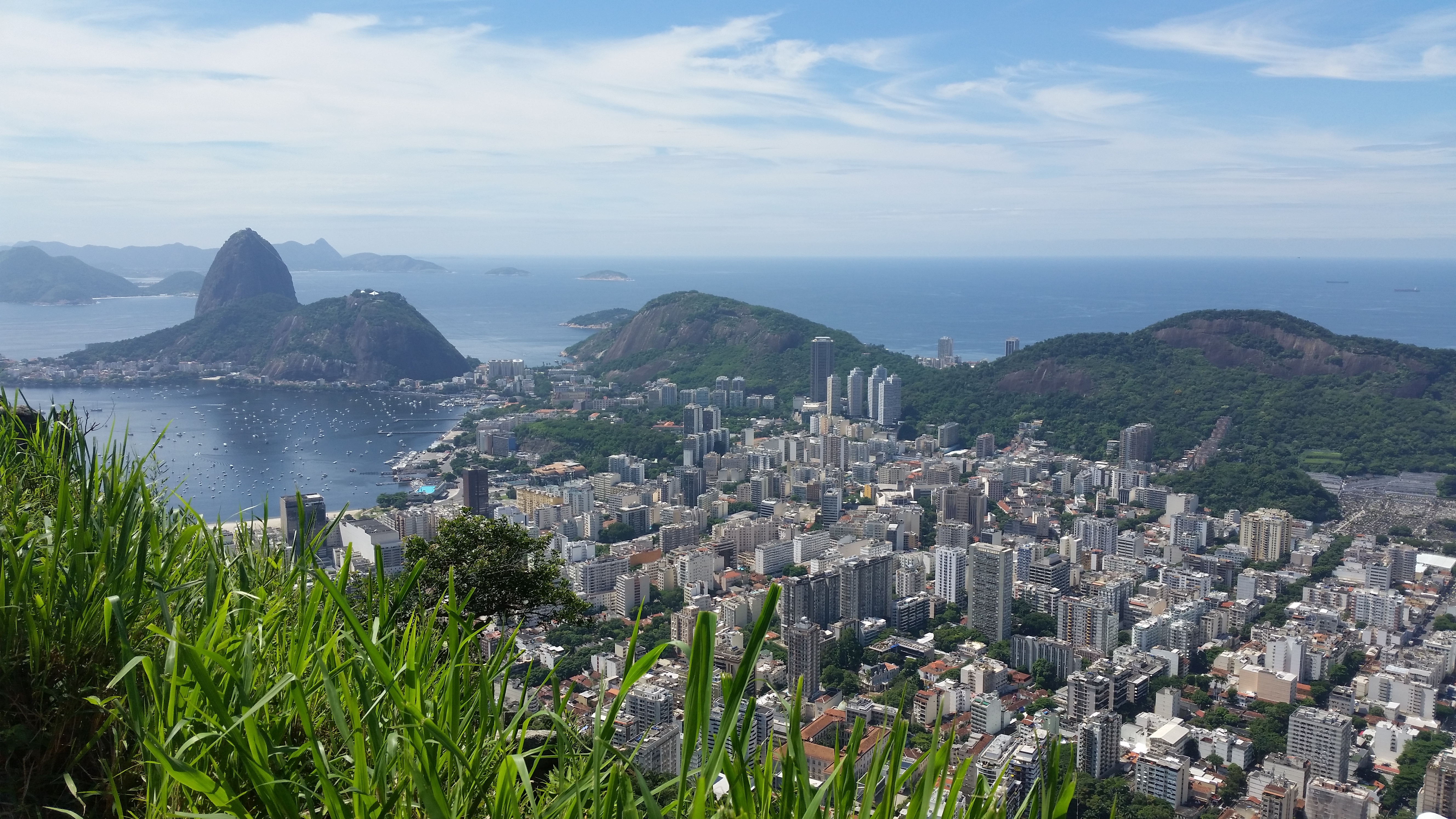
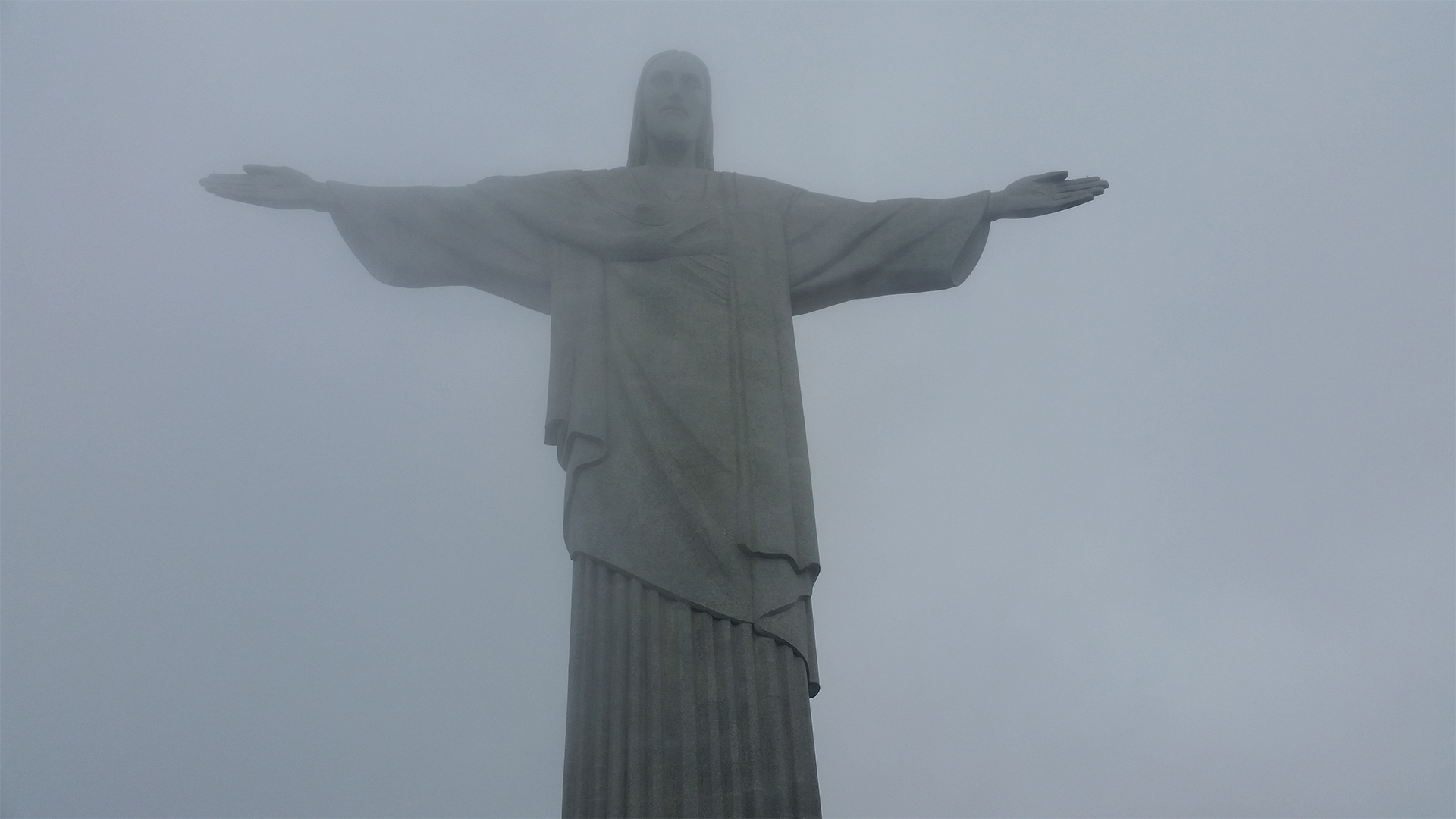
Now, even this type of Brazil has a two rather different faces. You can spend your whole holiday on a beach of Copacabana or Ipanema, or in a fancy neighborhood and think that you’ve seen Rio de Janeiro, while actually seeing only one small façade for the tourists. Of course, it is nice to climb the Cristo Redentor, 40m high and located atop the Corcovado, overlooking the town. It has been built in France in 1926., transported and assembled here in place. It’s especially nice if it doesn’t get foggy like when we have climbed, so that you can’t see in front of you.
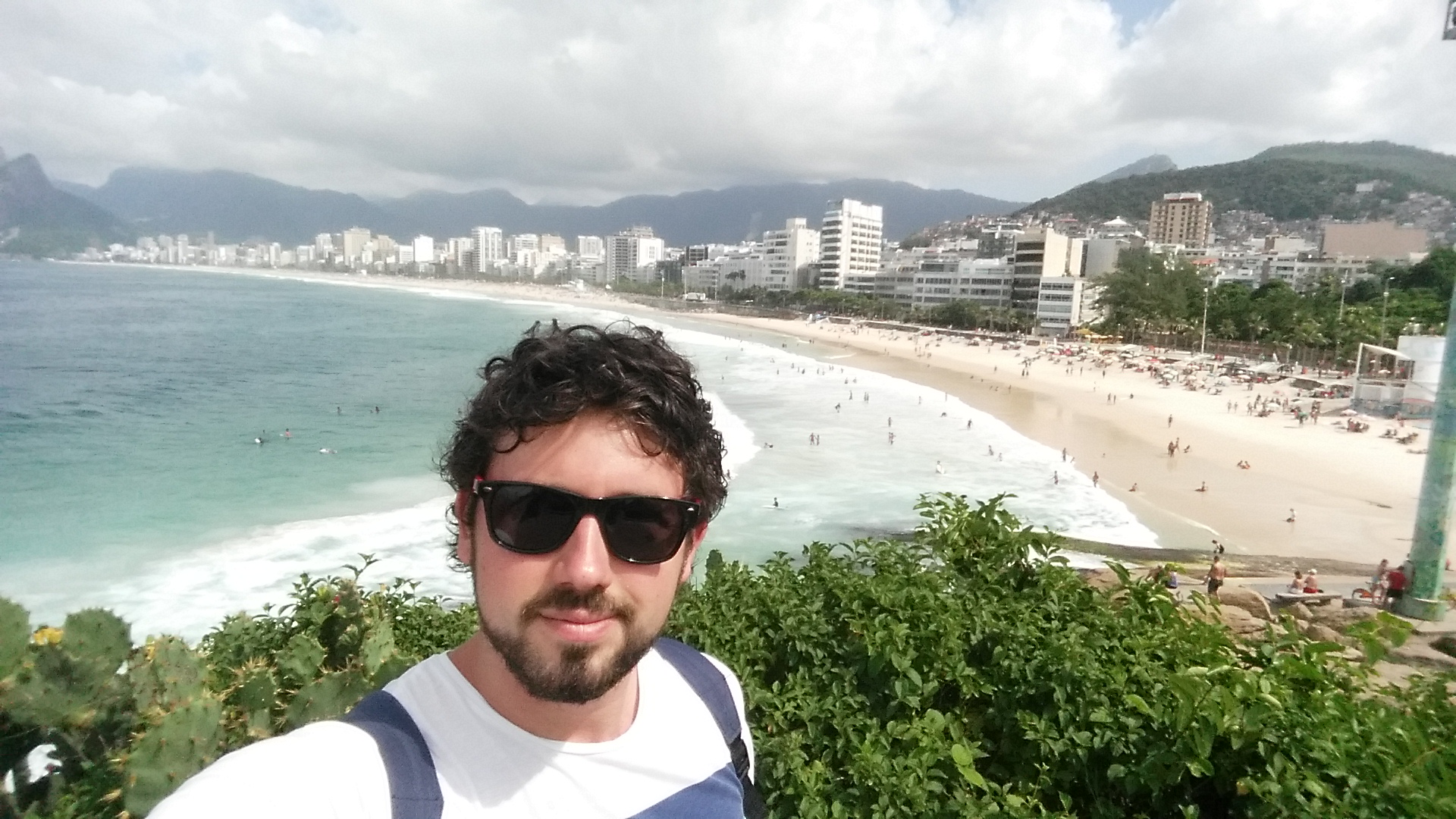
Its not bad either to walk the Laguna, Copacabana or Ipanema, where there are thousands of people on the beach, running of doing street workout. Really large number of people in these neighborhoods (mostly mid and upper class) work out. I must admit that I’ve never done more lift-ups then on the Copacabana, probably for the surrounding in a form of a lot of fit Brazilian girls around. However, to be honest, it’s not really like on a postcard. As much as beaches are nice to see, they are still ocean beaches where there’s almost no one actually in the sea. Its deep, waves are high, and the currents are strong, so its more convenient for surfing than for the swimming. Also, the thongs are not so spread and dominant as one might imagine.
As usual, there is nothing I like more than to locate a good neighborhood coffee bar with a good coffee. Regarding the good coffee, that’s harder to miss than to find in Brazil, so I’ve found one just in front of a house where I’d start every day at 7am by talking to the local pensioners about Brazilian football and politics. If you wonder why at 7am, simply because the jetlag supports getting up early, if you travel to the west. Fortunately, I’ve prepared myself and studied the Brazilian football beforehand, because these folks knew every detail of both the Brazilian and the European football. By talking with them, I’ve learned all the rivalries and grand matches from 1950 forwards. It’s a miracle that Brazilian football league, basically there’s at least 15 clubs winning trophies through the history, so it’s never boring. 2 weeks later I’ll go to one match myself to see with my own eyes how does that look like.
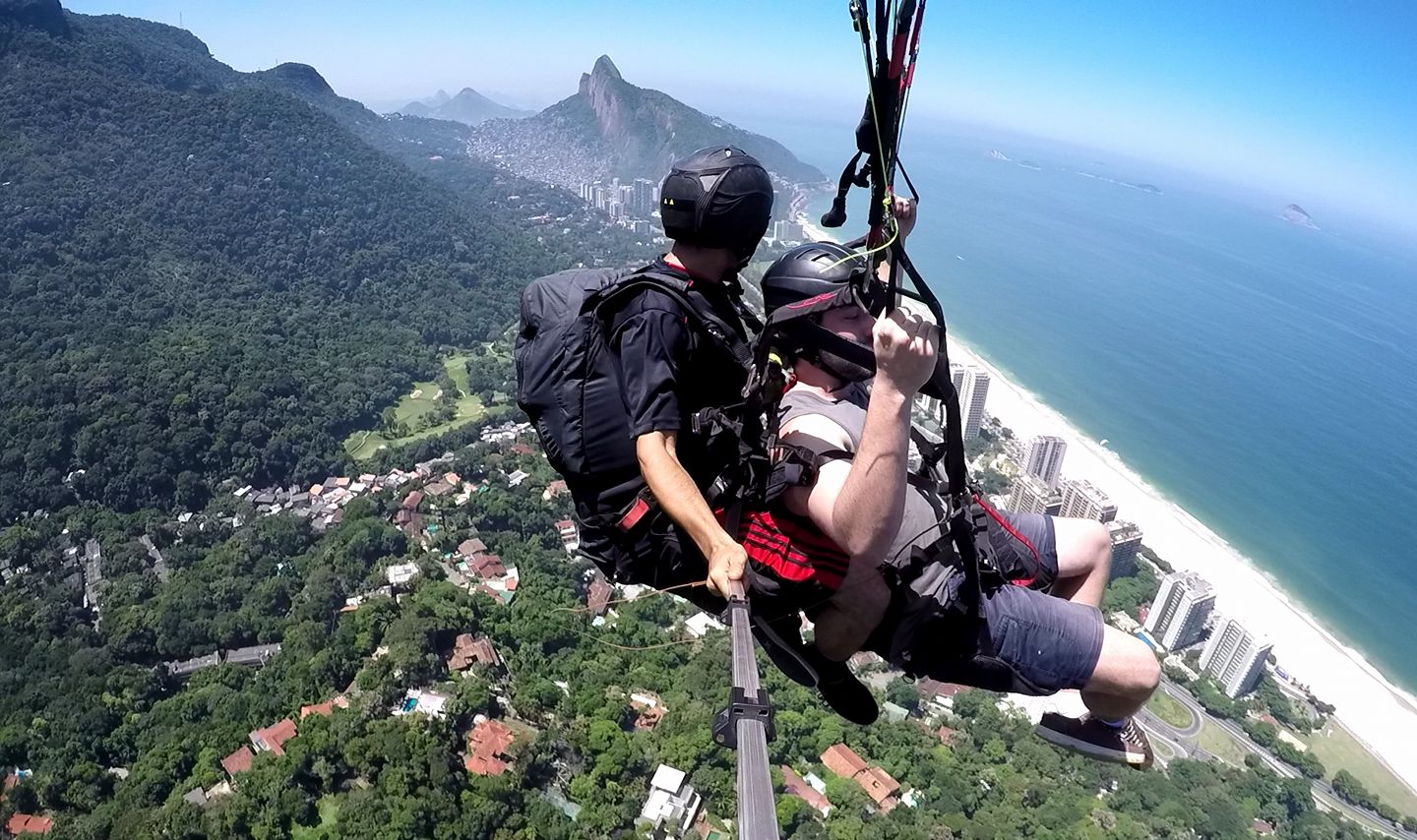
Since I’m not that much of a grandpa to just drink coffees with pensioners at 7am and discuss football and politics, I’ve heard from the friend Sabika, that in Rio there’s one of the best places in the world to do paragliding. More precisely, from the rock called Pedra bonita, above the beach of Sao Cristobal in the west part of the city. Seems people are coming here from all over the world to do the jump. Thanks to Mate’s diplomacy skills, through the connection we got the price “for the locals” and one morning we went to do it. In the beginning it seems like a great idea, so you don’t really care while signing all the contracts and forms where you take the full responsibility and blah blah. You reach the top with the van, where they explain you all the rules of the behavior for the jump, and all seems perfect, so you don’t even care that there is a yellow flag that means there is a counter direction wind, and the jumps have to be made more carefully (Green means good conditions, red mean jumps prohibited). Since you jump with an instructor, there is no reason to be nervous. More precisely, all till the moment when you reach the edge of the cliff. Then my minds went into this direction: “What a fool I am, pay money to get killed here”. It doesn’t help that the instructor tells you in a bad English: “very important, walk walk walk, when reach cliff end no stop, stop die, walk walk walk, must walk on”. Although the part where you actually have to walk in the abyss is scary, as soon as the paraglider inflates you start flying really relaxed. On your right you see the granite massifs, on your left Rio, favelas and Cristo redentor, and in front of you the Atlantic. While I was flying, it crossed my mind how only now I have understood Richard Bach who in “Seagull Jonathan Livingston” says there is no feeling like flying. Or not to talk crap too much, it was just a fucking good feeling. I totally got into it.
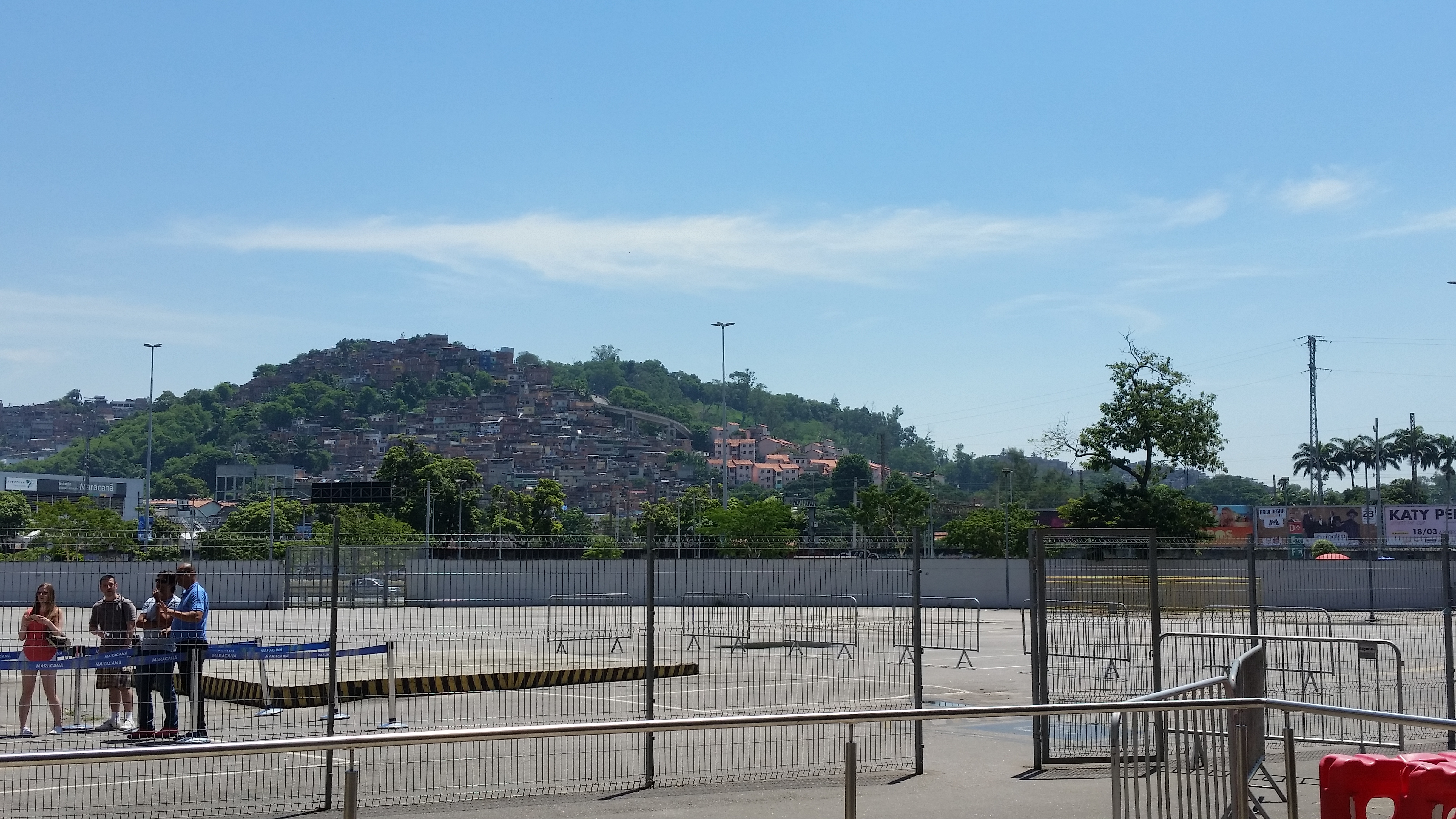
After this, more of a touristic part of an experience with the paragliding, the time has come to meet the real Rio. Anyway, it is the part that forms the significant part of the city – favelas, but not alone by any means, but with locals.